
Navigating the legal landscape in Glynn County can feel like a daunting climb, but you don’t have to reach the summit alone. Whether you are seeking a bond reduction or holding the state accountable to its strict 90-day deadlines, the law provides powerful safety valves designed specifically to protect your liberty. By combining a deep understanding of Georgia statutes with a proactive, assertive strategy, you can cut through the red tape of the Brunswick Judicial Circuit and focus on the goal that matters most: bringing you or your loved one home. Every challenge in the bond process is an opportunity to assert your rights, and with the right legal roadmap, you will navigate this system with the confidence and clarity you deserve.
 Key Takeaways
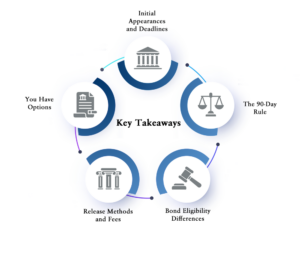
Initial Appearances and Deadlines: Defendants typically have their first court meeting within 48 to 72 hours of arrest, during which a judge explains their rights and determines if a bond will be set.
The 90-Day Rule: If the state fails to officially indict a defendant held without bail within 90 days, the law requires that a bond amount be set for their release.
Bond Eligibility Differences: While misdemeanor defendants generally have a legal right to bail, felony bonds are considered a privilege that a judge may deny based on risk factors.
Release Methods and Fees: Families can secure a release using cash, a professional bonding company, or property collateral, though all methods require a non-refundable $20.00 processing fee.
You Have Options: Specialized programs offer paths to release and potential charge dismissal for those willing to commit to treatment or community requirements.
Bond Protocols
When someone is arrested in Glynn County, the initial appearance is their first formal meeting with a judge, usually occurring within 48 to 72 hours. Because of the high volume of cases, this often happens via a video link between the Glynn County Detention Center and the courtroom. During this brief hearing, a magistrate judge explains the formal charges and confirms that the person understands their constitutional rights, such as the right to remain silent and the right to a lawyer. If the person cannot afford an attorney, the judge will provide information on how to apply for a public defender.
The most critical part of this meeting is the bond decision. The judge evaluates several factors, including whether the person is a danger to the community or likely to run away. For most minor crimes or non-violent felonies, the judge will set a specific dollar amount for bond or, in some cases, allow the person to leave on a signature bond without paying upfront. However, under Georgia law, a magistrate judge does not have the authority to set bond for very serious crimes like murder or armed robbery. In those specific cases, the judge must formally deny bond, and the person’s attorney will have to request a separate hearing in superior court later on.
Once a bond is set, the person or their family can choose to pay the full amount in cash, use a professional bonding company for a fee, or put up local property as collateral. No matter which method is chosen, the Glynn County Sheriff’s Office is required to collect a non-refundable $20.00 fee to process the paperwork. After the bond is paid and the paperwork is completed, the individual is released, with a strict requirement to appear for all future court dates.
Bonds for Misdemeanors and Bonds for Felonies
The biggest difference between a misdemeanor and a felony bond is that for a misdemeanor, you generally have a legal right to be released on bond, whereas for a felony, bond is a privilege that a judge can choose to deny. Under Georgia law, anyone charged with a misdemeanor must be granted bail unless they are a significant danger to others. Because of this right, many common misdemeanors, such as DUIs or minor shoplifting, are subject to a bond schedule at the Glynn County Detention Center. This means the jail has a pre-set price list for these crimes, allowing you to pay and be released within a few hours of your arrest, without ever having to wait for a judge to review your case.
Felony bonds are handled much more strictly because they involve more serious crimes that carry more than a year in prison. For most felonies, you cannot simply pay a set fee at the jail as you would for a misdemeanor. Instead, you must wait for a first appearance hearing, which usually happens within 48 to 72 hours of your arrest. At this hearing, a Magistrate Judge will use the specific factors to decide if you are likely to run away or hurt someone if you are let out. If the judge thinks the risk is too high, they can order you to stay in jail with no bond. For the most serious felonies, like murder or armed robbery, a magistrate judge isn’t even allowed to set a bond at all. In those cases, your attorney must file a special motion in Superior Court, which can often take several weeks to be heard by a higher-level judge.
A misdemeanor bond is designed to be a quick in-and-out process that favors your freedom. A felony bond is a more formal and cautious process in which the judge has the final say on whether you are allowed to go home while waiting for trial. Whether you are dealing with a misdemeanor or a felony, the goal of the bond remains the same: it is a financial promise to the court that you will appear for every hearing.
Motion to Deny Bail
A motion to deny bond is a formal request by the district attorney’s office to keep a defendant in jail until their trial. While most people have a right to bail, the state can ask a judge to withhold it if it believes the person is too dangerous or likely to flee. For very serious crimes, such as murder or armed robbery, a magistrate judge is legally required to deny bond immediately, and a special hearing must be scheduled later with a Superior Court Judge to decide if the person can eventually be released.
To keep someone in jail without bond, the prosecutor must prove to the judge that the defendant fails at least one of four tests. These tests assess whether the person is a flight risk, a danger to the community, a risk of committing new crimes, or likely to intimidate witnesses or hide evidence. While the defendant must first show they have roots in the community, such as a job or family in the Brunswick area, the burden then shifts to the state to prove that releasing them would pose a significant risk to the public or the legal process.
If a judge denies bond, the defendant remains at the Glynn County Detention Center, but they are not necessarily stuck there forever. If the state takes longer than 90 days to officially indict the person, the defendant may become eligible for a bond. Additionally, if new evidence comes to light or the defendant’s circumstances change, their attorney can file a motion to reconsider to ask the judge to set a bond amount at a later date.
 Petition for Bond Reconsideration or Reduction
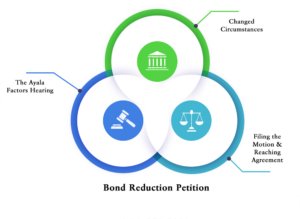
A motion for bond reconsideration or reduction is a legal request asking a judge to lower a previously set bond or to grant a bond that was previously denied. This usually happens if the original bond was too expensive for the family to pay or if something important has changed since the first hearing. For example, if a defendant now has a guaranteed job, a new place to live, or a medical condition that the jail cannot handle, a lawyer can use these changed circumstances to argue that the person is now a lower risk and deserves a more affordable bond.
To start this process, an attorney files a written motion with the Glynn County Clerk of Court. This motion must be shared with the district attorney’s office so they can prepare their side. Under Georgia law, bonds can be amended and updated as needed throughout a case. Sometimes, the defense and the prosecutor can even agree on a lower amount without a big fight. If they do agree, they sign a consent order, and as soon as a judge signs it, the bond is officially lowered.
If there isn’t an agreement, the judge will hold a brief hearing to look at the Ayala factors one more time. These factors help the judge decide if the person is likely to run away, hurt someone in the community, commit more crimes, or scare witnesses. If the judge is convinced that the new information makes the defendant a safe bet, they will sign an order reducing the bond amount. Once that is done, the family can pay the new, lower amount at the Glynn County Detention Center to get their loved one home.
Application for Writ of Habeas Corpus
An application for writ of habeas corpus is a special legal tool used to challenge someone’s imprisonment if their bond process has been handled unfairly. While a standard motion to reduce bond is used for most cases, a habeas petition is a last resort used when a person believes their detention is completely illegal or unconstitutional. For example, if a judge sets a bond amount so high that it is impossible for anyone to pay, or if the jail continues to hold someone after their legal deadlines have passed, an attorney can file this petition to force a court to justify why the person is still behind bars. This process is protected by the U.S. Constitution and ensures that no one is held in the Glynn County Detention Center without a valid legal reason.
Technically, a habeas petition starts a new civil lawsuit against the Glynn County Sheriff, who is the official responsible for the jail. Once the paperwork is filed with the Superior Court, a judge will usually issue a show cause order. This requires the Sheriff or the prosecutor to come to court and prove that the person is being held legally. During the hearing, the judge will re-examine the Ayala factors, such as whether the person is a flight risk or a danger to the community, to decide if the current bond is excessive. If the judge finds that the bail is too high or the detention is unlawful, they have the power to immediately lower the bond or even order the person’s release.
Because this is a more complex legal action than a standard bond hearing, it is often the final step before an attorney seeks to appeal a case to a higher court, such as the Georgia Supreme Court. It serves as a vital safety valve in the Glynn County justice system, making sure that the government follows the rules and doesn’t keep people in jail indefinitely without a fair chance at bail. While it is not used in every case, it remains a powerful way to protect a defendant’s right to be free until their trial, provided they aren’t a proven threat to the public.
The 90 Day Rule
The 90-Day Rule is a critical deadline in Glynn County that prevents the government from holding someone in jail indefinitely without filing formal charges. If a person is arrested and held at the Glynn County Detention Center without bail, the DA has exactly 90 days to present the case to a Grand Jury and obtain an indictment. If the 90-day mark passes and the person has not been indicted, the law states that the defendant is entitled to a bond, allowing them to be released while awaiting trial.
Think of this rule as a safety valve. In Glynn County, if a magistrate or superior court judge initially denies bond because they believe a defendant is a flight risk or a danger to the community, that denial is not necessarily permanent. Once the 90 days are up, the burden shifts. The law assumes that if the state hasn’t been able to put together a formal case within three months, it is no longer fair to keep the person in jail without bail. At that point, the judge must set a bond, although they can still set the amount high or include strict conditions like GPS monitoring or house arrest.
There is one major exception to this rule: the prosecutor can ask the judge for a single 90-day extension. To get this extra time, the district attorney must show good cause, usually a valid reason why the investigation is delayed, such as waiting for a complex DNA report from the Georgia Bureau of Investigation or a long-delayed autopsy. If the judge grants this extension, the state gets a total of 180 days to indict the person. If they still haven’t been indicted by the end of that second 90-day window, the right to a bond becomes absolute, and the judge must set an amount for the defendant’s release.
Considerations for the Judge
In Glynn County, a judge cannot simply pick a random dollar amount for a bond. The process of determining a bond amount requires them to follow a specific legal test mandated by Georgia law. This test is designed to balance the defendant’s constitutional right to be considered innocent until proven guilty against the need to protect the citizens of Glynn County. Judges in both the magistrate and superior courts use four primary criteria, known as the Ayala factors, to decide whether a person should be released and to set the bond amount.
The judge’s first concern is whether the defendant will actually show up for their future court dates. To determine this, the judge looks at community ties. They will ask whether the person lives in Brunswick or the surrounding area, whether they have local family members, how long they have held their current job, and whether they have a history of failing to appear for past legal matters. If a person has no ties to Georgia or a history of running from the law, the judge will likely set a much higher bond or deny it entirely.
The judge must also consider if releasing the person poses a significant threat to others or to property. This is often the most debated factor. The judge will review the specific details of the current arrest, such as whether a weapon was used or there was an act of violence, and examine the defendant’s prior criminal record. If the person has a history of violent offenses, the judge may conclude that the risk to public safety is too high to allow for a low bond.
Even if a person isn’t considered dangerous in a violent sense, the judge evaluates the likelihood that they will commit another serious crime while out on bond. For example, if someone is arrested for a third or fourth non-violent felony in a short period, the judge may decide that the person is likely to continue breaking the law. In these cases, the judge might add strict conditions to the bond, such as a Fourth Amendment waiver, which allows police to search them without a warrant, or a requirement for regular check-ins with pretrial services.
Finally, the judge looks at whether the defendant might try to interfere with the case. This includes concerns that the person might threaten victims or witnesses, or try to hide or destroy evidence. If the judge believes there is a risk of obstruction of justice, they may issue a no-contact order as a condition of bond, meaning the defendant cannot communicate with the alleged victims or witnesses while the case is pending.
FAQs
How long does it take to be released after the bond is posted? While the paperwork typically takes about 10 to 15 minutes, the actual release time depends on the Glynn County Detention Center’s workload and can take several hours.
Is the money I pay to a bonding company refundable? No, the 12% to 15% fee paid to a professional bondsman is a non-refundable service charge regulated by Georgia law.
What happens if the defendant misses a court date? The bond will be forfeited, a bench warrant will be issued for the defendant’s arrest, and any collateral provided may be seized by the court.
Can I use property I own in another county to post a bond? Yes, but you must first have the bond approved by the Sheriff of that county and then deliver the paperwork in a sealed envelope to the Glynn County jail.
Why was my bond denied at the first appearance? Only a Superior Court Judge can set bond for serious offenses like murder or armed robbery, so a magistrate judge must initially deny it.
Release Due to Prosecutorial Delay
In Glynn County, being released due to prosecutorial delay means that the legal clock has run out for the District Attorney to move your case forward. Georgia law sets strict deadlines to ensure that the government doesn’t keep people in jail indefinitely while it investigates or prepares for trial. The most common way this happens is through the 90-day rule. If a person is held at the Glynn County Detention Center without bail, the prosecutor has exactly 90 days to officially charge them by grand jury indictment. If that 90-day window passes and there is still no indictment, the judge is legally required to set a bond amount so the person can go home while waiting for their day in court.
Another form of release occurs when a lawyer files a statutory speedy-trial demand. In the Brunswick Judicial Circuit, which includes Glynn County, this demand forces the state to bring the case to trial within a very specific timeframe, usually two terms of court. If the prosecutor fails to start the trial by the end of that period, and the delay wasn’t caused by the defendant, the charges must be completely dismissed. This is a permanent release, meaning the person is acquitted and the state can never bring those specific charges against them again.
Lastly, delays can lead to release even earlier in the process, such as during a commitment hearing. If the state isn’t ready to present its initial evidence to a judge and requests more time, state law allows the judge to set a bond for the defendant during that period. Essentially, these rules act as a timer on the government: if the prosecution is not prepared to meet its deadlines, the law favors the defendant’s liberty, ensuring they aren’t punished with jail time before they have even been convicted.
 Types of Bonds
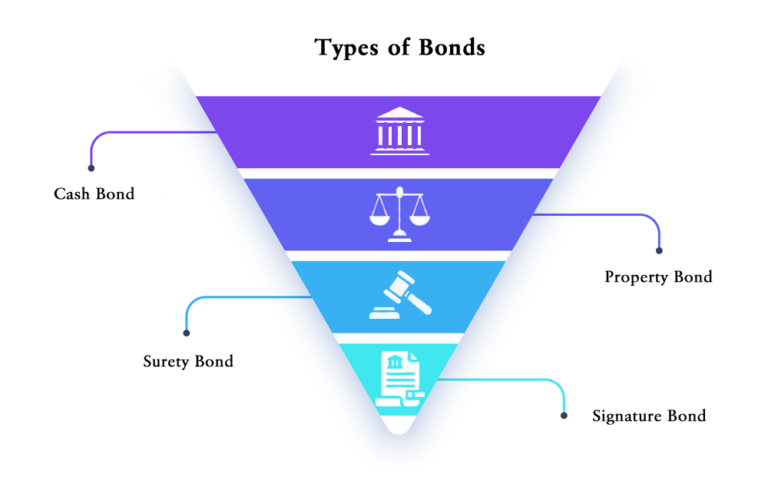
There are four main ways to get someone out of the Glynn County Detention Center on bond. Each method works differently in terms of what you have to provide upfront and how you might get that money or property back later.
The most direct method is a cash bond, where you pay the full bond amount to the jail. While this requires the most money immediately, it is also the only type where you can get your money back, minus small fees, once the case is over, as long as the defendant goes to all their court dates. If you don’t have the full amount, you can use a professional surety bond. This involves paying a non-refundable fee, usually 12% to 15% of the total bond, to a licensed bonding company. The company then promises the court that it will pay the full amount if the defendant skips town. While this is cheaper at the start, you will never get that 12% to 15% fee back, no matter how the case ends.
Another option is a property bond, which lets you use the value of your home or land as collateral instead of cash. In Glynn County, the property must be local, and the equity must usually be worth twice the bond amount. This is a serious commitment because if the defendant misses court, the county can actually seize and sell the property to collect the money. Finally, for some minor charges or people with very strong ties to the community, a judge might grant a signature bond. This is as close to a get-out-of-jail-free card as you can get, where the defendant simply signs a promise to return to court without paying any money or putting up any property at all.
Required Fees and Documentation
The process of posting bond requires both a specific set of documents and payment of mandatory fees at the Glynn County Detention Center, located at 100 Sulphur Springs Road in Brunswick, Georgia. Every person who signs a bond must be at least 18 years old and present a valid government-issued photo ID, such as a driver’s license or passport. Regardless of which type of bond you choose, the Sheriff is required to collect a non-refundable $20.00 processing fee for every criminal bond. This fee is separate from the actual bond amount and is typically paid in exact change or a money order at the jail’s bonding window.
If you are using a professional bonding company, you will also need to pay them a non-refundable service fee, which Georgia law sets at 12% to 15% of the total bond amount. However, if you choose to use a property bond, the paperwork is much more detailed. You must provide the original deed to the property, a current tax statement showing its value, and a recent mortgage statement to prove there is enough equity. Most importantly, every person listed on the property deed must be physically present at the jail to sign the paperwork. If a co-owner has passed away, you must bring a certified copy of their death certificate to prove that you are the sole person authorized to use the home as collateral.
Once all the correct documents are handed over and the fees are paid, the jail staff will verify the information, which usually takes about 30 to 60 minutes. After the paperwork is finalized, the defendant’s release process begins. Because the bonding window at the jail is the central hub for this, it is often helpful to call ahead or check the Glynn County Sheriff’s Office website to confirm the current accepted payment methods.
Pretrial Options
For people facing their first minor charge, the Brunswick Judicial Circuit Pretrial Diversion Program offers a way to avoid a criminal record altogether. This program is run by the District Attorney’s office and is designed for non-violent, first-time offenders. If you are accepted, you might be released on a much lower bond or even a signature bond. To stay in the program, you have to complete requirements like community service, counseling, or paying back any money owed to victims. The best part of this option is that if you finish everything successfully, the prosecutor will completely dismiss the charges, meaning you won’t have a conviction on your record.
Glynn County also operates accountability courts, which are specialized programs designed to address the root causes of criminal behavior, such as drug addiction or mental health issues, rather than just using jail as a punishment. These courts, which include drug court, mental health court, and veteran’s treatment court, play a unique role in the bond process by offering a way for a defendant to be released from detention under very strict, treatment-focused conditions. Instead of just paying money to get out, a defendant in an accountability court program essentially trades their time in jail for a long-term commitment to a supervised recovery plan.
When a defendant is accepted into one of these programs, the judge will often issue an accountability court bond order. This is a special type of release in which the bond amount is often set to $0, but it comes with a long list of conditions. These conditions typically include random and frequent drug testing, mandatory counseling sessions, and a strict curfew. In Glynn County, the drug court has been operating since 1998 and requires a commitment of 18 to 24 months. If a person violates any of these program rules, such as failing a drug test or missing a meeting, the judge can immediately revoke their bond and send them back to jail.
The biggest advantage of using an accountability court during the bond process is the potential for a second chance. If a participant successfully completes the entire program, their original criminal charges can be completely dismissed, or their sentence can be significantly reduced. However, because these programs are so intensive, they are generally reserved for high-need individuals who are genuinely struggling with substance abuse or mental health disorders. If you are interested in this path, your attorney must usually submit a referral to the accountability court coordinator to begin the screening process, which includes a background check and a clinical assessment to see if you are a good fit for the program.
 Processing Release
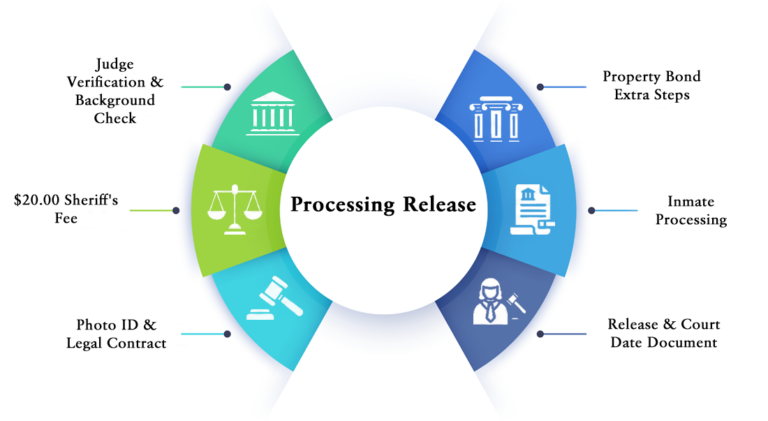
Processing at the detention center is the final administrative phase in which the court’s bond order is converted into an actual release. This takes place at the Glynn County Detention Center, where the Sheriff’s Office staff must first verify that a judge has officially set a bond. Before anyone is let go, the jail conducts a mandatory background check to ensure the defendant has no active warrants in other counties or states. You must also pay a non-refundable $20.00 sheriff’s fee to the jail’s bonding window. It is important to bring exact change or a money order, as the jail often cannot make change, which could delay the entire process.
The person paying the bond must show a valid government photo ID and sign a legal contract. By signing this document, you are promising the court that you will pay the full bond amount if the defendant misses their court date. If you are using a property bond, this step takes longer because jail staff must carefully verify the original deed and ensure the property is worth enough to cover the bond. For a property bond to be finalized, every person listed on the house deed must be physically present at the jail to sign the forms in front of an officer.
Once the paperwork is signed and the $20.00 fee is paid, the release process begins, typically taking between 2 and 6 hours. This delay occurs because the jail must remove the inmate from their housing area, retrieve their personal belongings, such as their wallet, phone, and clothes, from storage, and complete a final identity check and fingerprinting. Because the jail is a high-security facility, shift changes or emergencies can sometimes further slow this down. After all these steps are completed, the individual is finally released and given a document listing their next required court date.
Schedule a Free Case Evaluation Today and Learn to Better Navigate the System
To learn more about the bond process, The Turner Firm offers free, no-obligation consultations by phone, online, or in person.