
Bond Denial in Chatham County, Georgia
Estimated Read Time: 9-10 Minutes
While the legal system can feel like an uphill battle, especially after a bond denial, it is important to remember that this moment is a starting point, not a final destination. In Chatham County, the law provides multiple structured paths, from the 90-day rule and accountability courts to consent reconsiderations, that are specifically designed to ensure your right to liberty is protected. By grounding yourself in these facts and local protocols, you are transforming uncertainty into a clear, strategic roadmap. With the right information and a focused approach, you can advocate for yourself or a loved one with the confidence that you are on the path home.
Key Takeaways
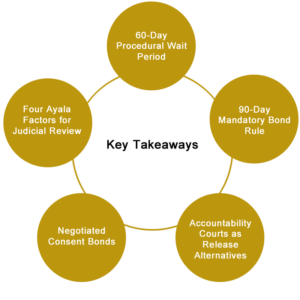
Fixed Procedural Wait Times: If a bond is denied, local court protocol generally requires a 60-day waiting period before a lawyer can file for a new hearing, unless there is a significant change in circumstances.
The 90-Day Legal Safety Valve: Under Georgia law, if a person is held without a bond for 90 days and the state has not yet issued a formal indictment, the judge is legally required to set a bond.
Accountability Courts as Alternatives: Programs like drug court or mental health court can serve as a second chance for release by replacing a standard cash bond with a strictly supervised treatment plan.
Negotiated Consent Bonds: The fastest way to secure release is often through a consent bond, which occurs when the defense and prosecution agree on bail terms that a judge then signs without a formal courtroom battle.
Specific Factors for Judicial Review: When deciding on bond, judges must weigh four safety questions known as Ayala factors, focusing on whether the person is a flight risk, a danger to the community, likely to commit a new felony, or a threat to witnesses.
Bond Protocols
Think of bond protocol as the house rules in Chatham County that lawyers must follow to get someone out of jail. It outlines exactly which court has the power to set bail and how the paperwork must be handled. For minor crimes, the magistrate court handles things quickly, but for serious charges like murder or armed robbery, Georgia law requires that only a superior court judge can make the decision. The protocol requires all requests to be filed electronically, and your defense attorney must make sure the district attorney’s office receives a copy immediately so everyone is on the same page. A very important part of this rule is that you must go back to the same judge who previously handled the case. Switching judges for a better outcome isn’t allowed.
The protocol also provides a faster way to get someone home through something called a consent bond. This happens when the defense and the prosecution agree on a bail amount and specific safety rules, such as wearing a GPS monitor, and the judge simply signs off on it without a formal courtroom hearing. Once the judge grants the bond, the protocol shifts to the sheriff’s office. To actually get out, someone has to pay a non-refundable $20.00 fee and then either provide the full cash amount, use property as collateral, or hire a private bonding company to post the money for a fee.
Motion to Deny Bail
A motion to deny bail is a formal request by the prosecutor that asks a judge to keep someone in jail until their trial. In Chatham County, this usually happens in cases involving serious felonies. It is the prosecutor’s job to convince a superior court judge that the person is too risky to release. They generally focus on four main concerns: that the person might be a flight risk, that they pose a physical danger to the community, that they might commit more crimes while out, or that they might threaten witnesses.
During a bond hearing at the courthouse in Savannah, the prosecutor will present the person’s criminal record and the details of the current charges to back up their request. For very serious crimes, like murder or armed robbery, Georgia law actually assumes that bail should be denied unless the defense can prove otherwise. If the judge agrees with the prosecutor and denies bail, they must sign a written order explaining exactly why. However, this isn’t necessarily the end of the road. If the state takes more than 90 days to formally indict the person, the law requires the judge to eventually set a bond amount.
Petition for Bond Reconsideration or Reduction
A petition for bond reconsideration or reduction is a formal request for a judge to take a second look at a person’s jail status. In Chatham County, this is usually done when someone was originally denied bail or if the bail amount was set so high that the family cannot afford to pay it. The main goal of the petition is to show the judge that the current bond is either unnecessary or unfair. Under Georgia law, bail is intended to make sure a person shows up for their court dates, not to keep them in jail simply because they lack the money to pay bail.
In order to follow the bond protocol, a lawyer must file the request electronically and send a copy to the DA’s office. Usually, you must go back to the same judge who made the first decision. To be successful, the petition should highlight changed circumstances, such as being in jail for over 90 days without being formally charged, new evidence that supports their case, or a stable plan for where they will live if released. If the judge agrees to a hearing, they will weigh the risks of release against the person’s right to be out of jail while awaiting trial, sometimes lowering the price or adding conditions, such as a GPS ankle monitor.
 Application for Writ of Habeas Corpus
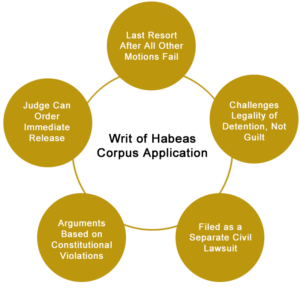
A writ of habeas corpus is a powerful legal tool used to challenge someone’s imprisonment. It is sometimes called the great writ because it is a person’s right to ask a judge to decide whether they are being held in jail legally. In Chatham County, this is usually a last-resort option if a bond has been denied and all other typical motions have failed. Unlike a regular criminal hearing, which focuses on whether a person is guilty or innocent, a habeas corpus case focuses solely on whether the jail has the legal authority to keep the person locked up. If the judge finds that the person’s constitutional rights were violated or that there is no legal basis to hold them, the judge can order their immediate release.
The process in Savannah involves filing a separate civil lawsuit against the person holding the detainee, which is usually the Chatham County Sheriff. Because it is a civil matter, it is assigned its own case number and handled under the Georgia Civil Practice Act. In Chatham County Superior Court, a lawyer might argue that a person’s rights were violated, for example, if they were held for a very long time without a hearing, or if the court ignored the mandatory 90-day rule for indictments. While it is an effective way to protect a person’s freedom, it is a complex legal maneuver that requires a deep understanding of constitutional law and is not to be taken lightly.
The 60 Day Rule
The 60-Day rule in Chatham County is a procedural guideline used by higher court judges to manage bond requests. It essentially creates a waiting period after a judge denies a person’s bail request. Once a judge hears a bond motion and decides to keep the person in jail, the court generally will not schedule another bond hearing for that person for at least 60 days. This rule is designed to prevent the court’s calendar from being overwhelmed by repetitive requests and to ensure that the judge only spends time on cases where something significant has changed since the last hearing.
In the Savannah court system, this rule means that if someone is denied bond today, their lawyer usually cannot just file the exact same paperwork tomorrow to try again. They must wait for this 60-day window to close unless there is a major change in circumstances, such as new evidence being discovered or a medical emergency, that makes it urgent for the judge to reconsider sooner. It is important to remember that this is a local policy of the Chatham County Superior Court judges to keep cases moving efficiently. While the 60-day rule governs how often you can ask for a bond, it does not override the 90-Day rule, which is a state law that requires a bond to be set if the prosecutor fails to formally charge the person within three months of their arrest.
The 90 Day Rule
The 90-Day rule is a powerful Georgia law that acts as a safety valve for people held in jail without bond. In Chatham County, if a person is arrested and denied bail, the prosecutor (the District Attorney) has exactly 90 days to formally charge them by getting an indictment from a Grand Jury. If the 90-day mark passes and the person has still not been indicted, the law says the judge must set a bond. This rule exists to prevent the government from keeping someone in jail indefinitely without officially moving the case forward.
In the Savannah court system, this rule is often the best chance for a person to get out of jail after an initial bond denial. Once the 90th day is reached, the defense attorney files a motion citing this specific law. While the judge is required to set a bond amount, they still have the power to decide how high that amount will be and what rules the person must follow, such as staying under house arrest or wearing a GPS monitor. It is important to note that the 90-day clock starts on the day the person is physically taken into custody. If the person is eventually indicted after the 90 days, they still get to keep the bond that was set under this rule.
Considerations for the Judge
When a judge in Chatham County decides whether to grant bond and how much it should cost, they are required by Georgia law to look at four specific safety questions. These are often called the Ayala factors. The judge’s main goal isn’t to punish the person yet, but to make sure they will show up for court and that the public will be safe while they wait for their trial. The judge balances the person’s right to be free before being proven guilty against the risks of releasing them from jail.
The first thing the judge considers is whether the person is a flight risk, meaning they might leave Savannah or skip town to avoid their charges. To decide this, the judge considers community ties, such as how long the person has lived in Chatham County, whether they have a local job, and whether they have family nearby who will make sure they go to court. Second, the judge considers whether the person poses a danger to the community or to specific people, such as the victim of the crime. Third, they consider the risk that the person will commit a new felony while out on bond. Finally, the judge checks if there is a risk that the person will threaten witnesses or try to hide evidence. If the judge is worried about these risks but still wants to grant bond, they might add special conditions, such as a no-contact order or requiring the person to wear a GPS ankle monitor.
FAQs
If the bond is denied today, can I ever ask again? Yes, your attorney can file a motion for reconsideration, though local protocol generally requires a 60-day wait unless there is a major change in the facts of the case.
Does a denial mean the judge thinks the person is guilty? No, a bond decision is a risk assessment regarding safety and flight risk, not a ruling on guilt or innocence.
What if the bond is set so high that we simply cannot afford it? In the eyes of the law, an unaffordable bond is often considered a de facto denial, and your lawyer can petition for a bond reduction based on your financial hardship.
How long can someone be held if they are denied bond? Under Georgia’s 90-Day rule, if the prosecutor fails to get an indictment within 90 days of the arrest, the judge is legally required to set a bond.
Can we appeal the judge’s decision to a higher court? Yes, you can file a notice of appeal to the Georgia Court of Appeals within 30 days, though this is a complex process usually reserved for clear legal errors.
Release Due to Prosecutorial Delay
Being released due to prosecutorial delay in Chatham County usually happens when the DA’s office takes too long to formally move a case forward. Under Georgia’s 90-Day rule, if a person is held in jail without a bond and the prosecutor fails to present the case to a grand jury for an indictment within 90 days, the law steps in to protect the person’s liberty. When this deadline is hit, the judge is legally required to set a bond. This does not mean the charges are dropped or that the person is free to go without any rules or consequences. It simply means they can no longer be held in jail for free while the state continues its investigation.
Once the 90-day mark passes, the defense lawyer files a specific motion for a bond hearing. During this hearing, the judge must set a bail amount, though they still have the power to make it a high cash bond or a lower signature bond. The judge can also impose strict conditions on the release, such as house arrest, GPS monitoring, or random drug testing, to ensure the person doesn’t disappear while the prosecutor finishes the paperwork. If the prosecutor eventually indicts the person after they have been released under this rule, the case continues as normal, and the person usually remains out on the bond that was already set.
 Consent Bonds
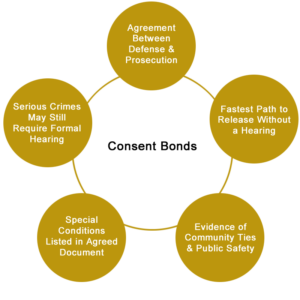
A consent bond is an agreement between the person in jail and the prosecutor regarding the terms of release, made through the person’s defense attorney. Instead of a courtroom battle where a judge decides who is right, both sides sit down and agree on a fair bail amount and specific safety rules. Because both sides already agree, the judge can simply sign a consent order in their office. This is often the fastest way to get someone out of jail in Chatham County because it allows you to skip the long wait for a formal court hearing, which can sometimes take weeks to schedule.
In the Savannah court system, defense attorneys use consent bonds as a negotiation tool. They will present evidence to the prosecutor showing that the defendant has strong community ties and isn’t a danger to the public. If the prosecutor agrees, they will draft a document that lists the bond amount and any special conditions, such as staying away from certain people or wearing a GPS monitor. Once the judge signs the agreed-upon document, it is sent to the Chatham County Sheriff’s Office, and the release process can begin as with any other bond. However, it is important to know that for very serious crimes or cases with victims, prosecutors are often more hesitant to agree to a consent bond and may insist on a formal hearing instead due to the severity of the crime.
Direct Appeal to the Georgia Court of Appeals
In simple terms, a direct appeal regarding bond is a way to ask the Georgia Court of Appeals to overrule a local judge’s decision to keep someone in jail. In Georgia, you don’t always have an automatic right to appeal a bond decision while the trial is still pending. Typically, permission needs to be asked through an interlocutory appeal. However, if the judge makes a final decision on a specific legal right, such as denying a bond after the 90-day deadline has passed, the defense can file a direct appeal to have that ruling reviewed immediately by the higher court in Atlanta.
The process in Savannah starts at the Chatham County Clerk’s Office, where the lawyer must file a notice of appeal within 30 days of the judge’s written order. This document officially informs the court that you are taking the case to a higher level. Because this is a high-level legal move, it involves a lot of paperwork, including a full transcript of everything said during the bond hearing and a formal brief explaining why the local judge was legally wrong. The Georgia Court of Appeals will then review the case to determine whether the judge abused their discretion, meaning they made a decision that went against the law or the facts of the case.
Pretrial Services Divisions
Think of the pretrial services division of the Chatham County Public Defender’s Office as the intake and investigation hub for people who have just been arrested. Its main job is to identify which inmates in the Chatham County Detention Center qualify for a free lawyer and to gather the information needed to help them get out of jail on bond as quickly as possible. This division is often the first point of contact between a person in jail and the legal system in Savannah.
When a person is first booked into jail, pretrial officers from this division conduct interviews to assess two main things: financial eligibility and community stability. First, they verify if the person meets the income guidelines to receive a Public Defender under Georgia law. Second, they collect social data, such as where the person lives, where they work, and their family ties in Savannah, to create a profile for the judge. This information is crucial for the first appearance hearing, as it helps the judge decide whether the person is a safe candidate for bond or should be supervised by a pretrial program instead of remaining in a cell.
Accountability Courts
Accountability courts in Chatham County, such as drug court, mental health court, and veterans court, serve as specialized alternative tracks that can directly influence whether a person is released from jail. When a standard bond is denied, these courts often offer a second chance at release by replacing a traditional cash bond with a strictly supervised treatment plan. If a person is accepted into an accountability court, the judge may grant them pretrial release on the condition that they follow all program rules.
The way this relates to bond is through the pre-adjudication entry. This means that before a person is even convicted, they agree to enter the program to get out of jail. Instead of paying a bondsman, the cost of release is the person’s commitment to intensive oversight, which includes random drug testing, weekly court appearances, and mandatory counseling. For a judge who was originally concerned that a person posed a danger to the community, the structure of an accountability court provides enough safety and monitoring to make them feel comfortable signing a release order. If the person successfully completes the program, the prosecutor may even agree to dismiss the original charges entirely.
 Release
Being released on bond in Chatham County means you are paying a form of insurance to the court to guarantee that you will show up for all your future trial dates. Once a judge sets a bond amount, the process shifts from the courthouse to the Chatham County Sheriff’s Office at the jail. There are three main ways to handle the payment, and each has its own rules.
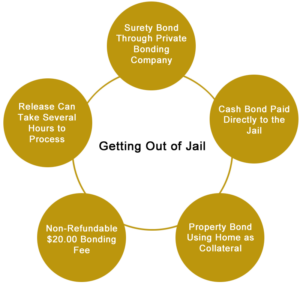
The first and most common way is using a surety bond through a private bonding company. You will pay the company a non-refundable fee, usually 12–15% of the total bond amount, and they promise the court they will pay the full amount if the person skips town. The second way is a cash bond, where you pay the full amount directly to the jail. While this is expensive upfront, you get all that money back at the end of the case, as long as you attend every court date. The third way is a property bond, which allows you to use a house in Chatham County as collateral. This requires a lot of paperwork, including a title search by an attorney to prove the house has enough value and no other debts against it.
Regardless of which method you choose, the jail requires a non-refundable $20.00 bonding fee. Once the payment is processed, the release isn’t instant; it can take several hours for the jail to finish the paperwork and background checks before the person is allowed to walk out.
Approved Bonding Companies in Chatham County, GA
According to the Chatham County Sheriff’s Office, as of 2026, the following companies are authorized to provide surety bonds:
Knowing Your Options
A bond denial is never the final word in your case, but rather a call to lean into the strategic protections the law provides. Whether we are navigating the mandatory release requirements of the 90-Day rule, negotiating a consent bond with the prosecution, or seeking a second chance through Savannah’s accountability courts, there is always a path forward rooted in the facts and your constitutional right to liberty. By carefully documenting your community ties and preparing for the future, we transform this temporary setback into a clear roadmap for your return home. Rest assured that with a focused approach and the weight of Georgia’s legal statutes behind us, we will continue to advocate tirelessly until justice and your freedom are secured.